Game Of Life
Conway's Game Of Life
  ____                         _   _ _       _
 / ___|___  _ __   ___  _ __  | | | (_)_ __ | |__   ___  ___
| |   / _ \| '_ \ / _ \| '__| | |_| | | '_ \| '_ \ / _ \/ _ \
| |__| (_) | | | | (_) | |    |  _  | | | | | | | |  __/  __/
 \____\___/|_| |_|\___/|_|    |_| |_|_|_| |_|_| |_|\___|\___|

Hi, I'm Conor. You found the curl view.

Links
- Home: https://www.conorhinchee.com
- Blog: https://www.conorhinchee.com/blog
- Now:  https://www.conorhinchee.com/now
- GitHub: https://github.com/Conor-Hinchee
- X: https://x.com/_DrunkWaffles_

Try these
- curl -L https://www.conorhinchee.com
- curl -L https://www.conorhinchee.com/blog
- curl -L https://www.conorhinchee.com/now
You are the tornado
In development
A mobile game in active development where you play as a happy little tornado and grow into a monster. Drag to steer, wander into everything, and watch the field come apart behind you.
The environment is destructible and the destruction is the progression. You get 150 seconds before you rope out, and your EF rating is the worst thing you managed to flatten, the way real ratings are assigned from surveyed damage rather than measured wind.
A structure below its break wind takes zero damage. A house ignores you outright until you have eaten enough trailers to raise your peak tangential velocity. There is no XP bar and no unlock screen, only the wind you have actually earned.
In progress · Next up: houses that shed a roof before they shed walls
Analog dashboard watch face · Garmin Venu 4
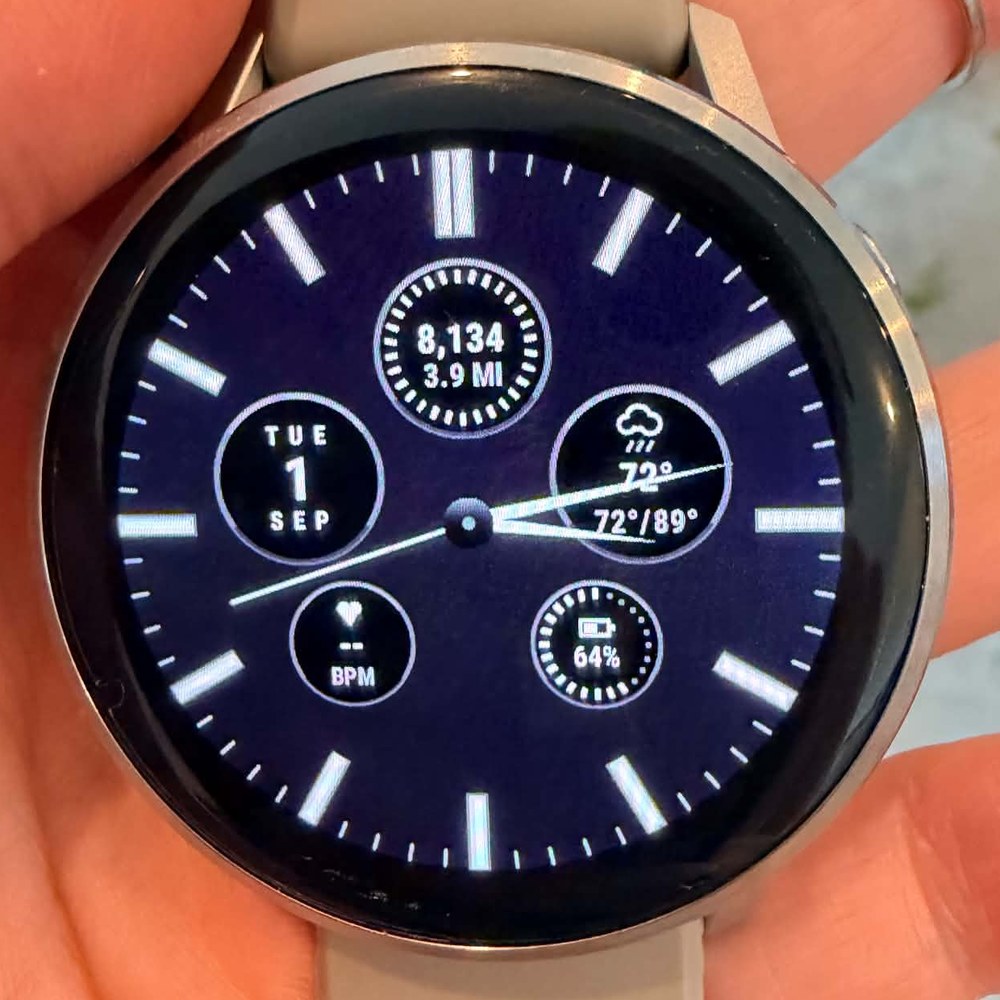
Connect IQ is a deliberately small sandbox. A watch face gets one update call per minute in normal use, a fixed 454 by 454 round canvas, a subset of the graphics API, and no access to most of the sensors a full app can reach.
That is what makes the Garmin SDK worth building against. The interesting work is not adding features, it is fitting eight live readouts into one legible instrument that still reads correctly when any one of them goes missing.
Everything above is drawn imperatively in Monkey C. No layout XML, no UI framework, and no bitmaps beyond the launcher icon.
Running on hardware · Tuning on-wrist typography and an always-on variant
Self-Hosted Agent Runtime
Archived 2026
Odin was a self-hosted agent runtime: persistent memory, 50+ tools, a seven-agent dispatch pipeline, and a nightly loop that read its own traces and rewrote its own prompts. It took a spec and opened a pull request. It ran work that spanned days.
Retired · No live instance
A command-line tool for analyzing Node.js heap snapshots. Parses .heapsnapshot files, surfaces the largest object allocations by type, and flags likely memory leaks — without needing Chrome DevTools open.
I use cookies for analytics. The digital kind — no chocolate chips involved.
FIND ME ONLINE